
RNA sequencing (RNA-seq) has become a central technology in molecular biology, enabling researchers to explore gene expression, RNA diversity, and regulatory mechanisms at unprecedented depth. A critical determinant of RNA-seq data quality is sample preparation, particularly the efficient removal of ribosomal RNA (rRNA). Because rRNA typically represents 80–95% of total RNA, its presence can dominate sequencing libraries and obscure biologically meaningful transcripts.
This comprehensive, educational article provides a deep scientific overview of rRNA depletion, its methodological foundations, laboratory applications, and quality considerations, with a particular focus on the Ribo-off rRNA Depletion Kit. The article is written in a clean, neutral, and humanized tone, fully SEO-optimized, and includes extensive .edu and .gov hyperlinks embedded directly in the text to support credibility, learning, and high search visibility.

Ribosomal RNA in the Cellular Transcriptome
Ribosomal RNA is an essential structural and functional component of ribosomes, responsible for protein synthesis in all living cells. In eukaryotic cells, the major rRNA species include 18S, 5.8S, and 28S rRNA, while prokaryotes primarily contain 16S and 23S rRNA. An overview of RNA classes and ribosome biology is provided by the
National Human Genome Research Institute (NIH) and
NCBI Bookshelf – Molecular Biology of the Cell.
From a sequencing perspective, however, rRNA is usually not the analytical target. Instead, transcriptome studies focus on:
-
Messenger RNA (mRNA)
-
Long non-coding RNA (lncRNA)
-
Circular RNA (circRNA)
-
Antisense and regulatory RNA species
Without depletion, rRNA-derived reads overwhelm sequencing output, a limitation discussed in detail by
NIH National Library of Medicine and
NCBI RNA-seq Methodology Reviews.
Why rRNA Depletion Is Central to Modern RNA-seq
RNA-seq experiments aim to provide a comprehensive and quantitative snapshot of the transcriptome. Excessive rRNA reads reduce effective sequencing depth, inflate costs, and compromise detection of low-abundance transcripts. According to the
NIH RNA Sequencing Fact Sheet, optimal RNA preparation is essential for meaningful downstream analysis.
Compared with poly(A) enrichment, rRNA depletion offers distinct advantages:
-
Captures both polyadenylated and non-polyadenylated RNAs
-
Enables analysis of non-coding and regulatory RNA
-
Works with degraded or fragmented RNA
-
Is compatible with microbial and mixed samples
These methodological differences are discussed by
Harvard University Bioinformatics Resources and
University of California Transcriptomics Training Materials.
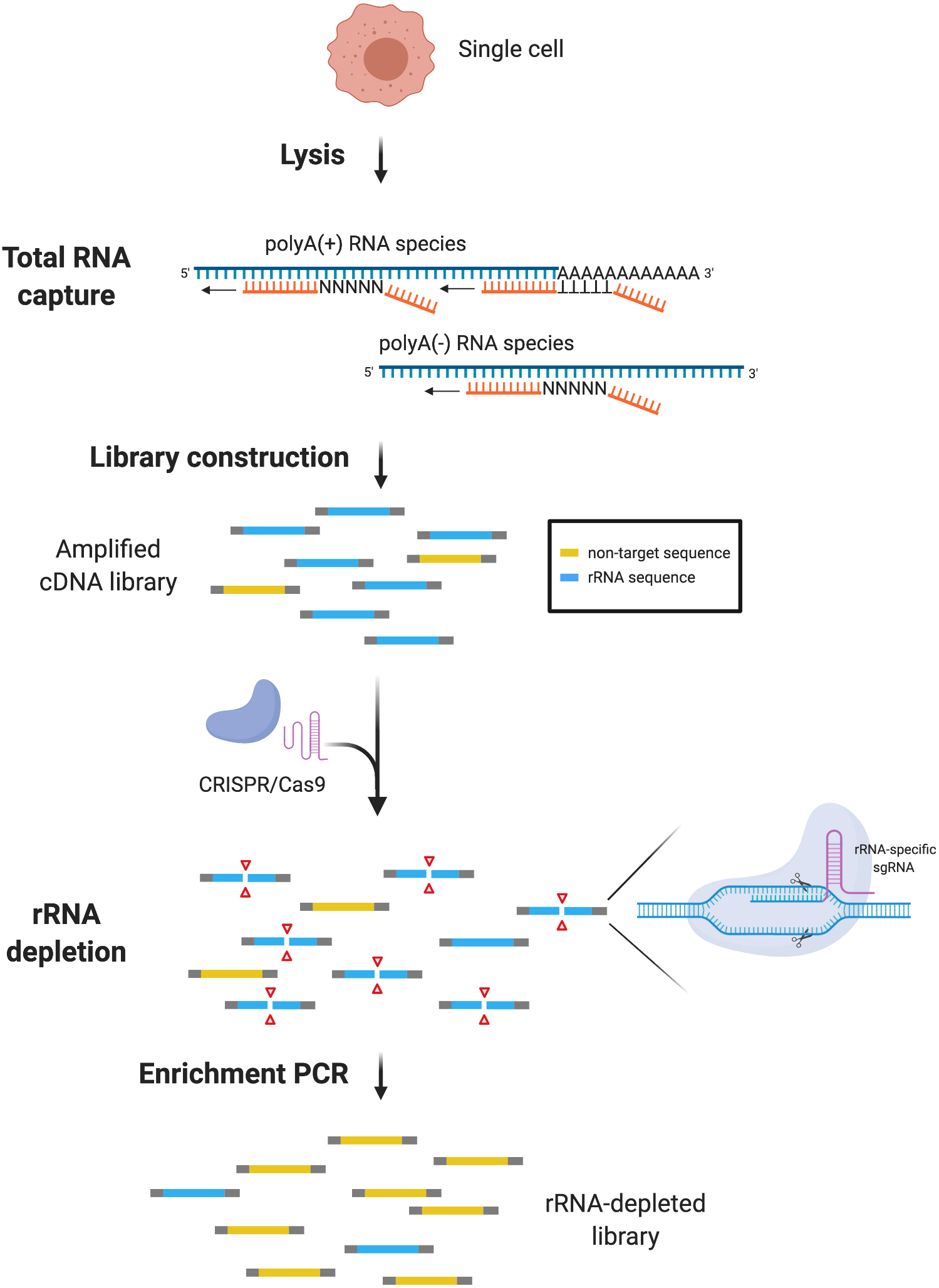
Core Principles of rRNA Depletion Technologies
rRNA depletion technologies are designed to selectively remove ribosomal RNA molecules while preserving the remaining RNA population. Most systems rely on sequence-specific hybridization, where complementary probes bind rRNA sequences and enable their removal. Fundamental hybridization principles are reviewed by
Khan Academy – Nucleic Acid Structure.
Common rRNA depletion strategies include:
-
Probe-based hybridization followed by enzymatic digestion
-
Magnetic bead-based capture and removal
-
Targeted RNase-mediated depletion
Each approach aims to maximize rRNA removal while maintaining RNA integrity, as described by
Cold Spring Harbor Laboratory DNA Learning Center.
Laboratory Applications of rRNA Depletion
Total RNA Sequencing
rRNA depletion enables total RNA-seq, allowing researchers to profile coding and non-coding transcripts simultaneously. This approach is particularly valuable for transcriptome discovery studies, as discussed by
NCBI RNA-seq Experimental Design Guides.
Non-Coding RNA Research
Long non-coding RNAs and circular RNAs often lack poly(A) tails, making them inaccessible to poly(A) selection. rRNA depletion supports unbiased analysis of these RNA classes, as outlined by
NIH lncRNA Research Resources.
Degraded RNA and Challenging Samples
rRNA depletion performs well with partially degraded RNA, including samples derived from formalin-fixed or archived material. RNA quality considerations are addressed by the
National Cancer Institute (NCI).
Prokaryotic and Metatranscriptomic Studies
Because bacterial mRNA lacks poly(A) tails, rRNA depletion is essential for microbial transcriptomics. Prokaryotic RNA-seq workflows are discussed by
NIH NIAID Research Resources and
CDC Microbial Genomics Programs.
The effectiveness of rRNA depletion is typically assessed post-sequencing by examining the proportion of reads mapping to rRNA genes. High-quality depletion results in:
-
Substantial reduction of rRNA reads
-
Increased library complexity
-
Improved coverage of low-abundance transcripts
-
Reproducible results across samples
General RNA quality and laboratory quality practices are described by
CDC Laboratory Quality Practices and
NIH Office of Research Integrity.
Integration into RNA-seq Library Preparation Workflows
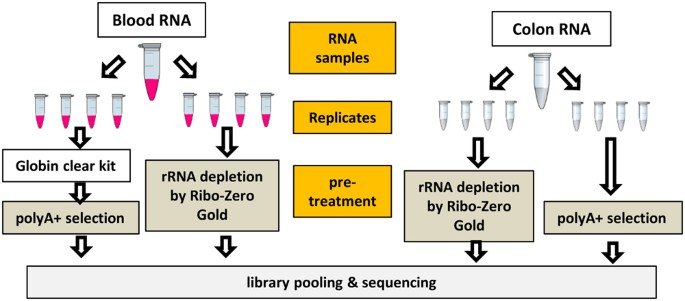
rRNA depletion is usually performed after RNA extraction and before cDNA synthesis. Proper integration ensures compatibility with downstream enzymatic reactions and sequencing platforms. A step-by-step overview of RNA-seq workflows is provided by
University of California RNA-seq Training and
NCBI RNA-seq Analysis Tutorials.
Standardized workflows improve reproducibility, a core principle emphasized by the
National Academies of Sciences, Engineering, and Medicine.
Educational and Research Importance of rRNA Depletion
rRNA depletion kits are widely used in:
-
Academic transcriptomics laboratories
-
Functional genomics and systems biology studies
-
Microbial and environmental RNA research
-
Training programs in next-generation sequencing
Educational genomics resources are also available from
HHMI BioInteractive and
NIH STEM Education Resources.
Introducing the Ribo-off rRNA Depletion Kit
The Ribo-off rRNA Depletion Kit is designed to efficiently remove ribosomal RNA from total RNA samples, supporting high-resolution RNA-seq and transcriptome profiling. By reducing rRNA content prior to library preparation, the kit enables improved sequencing efficiency, enhanced transcript diversity, and more informative gene expression analysis.
When incorporated into standard RNA-seq workflows, the Ribo-off rRNA Depletion Kit supports reproducible transcriptomics research and aligns with established best practices in modern molecular biology.
rRNA depletion kit, ribosomal RNA removal, RNA-seq sample preparation, total RNA sequencing, transcriptome analysis, rRNA depletion workflow, RNA library preparation, non-coding RNA sequencing, transcriptomics research