
Syndromic molecular diagnostics have transformed how laboratories approach the detection of infectious diseases, particularly respiratory infections. Instead of testing for individual pathogens one by one, multiplex PCR systems allow simultaneous detection of multiple targets from a single sample. Among these platforms, the QIAGEN® QIAstat-Dx® system is widely used for integrated, sample-to-answer molecular workflows.
At the core of reliable syndromic testing lies quality control. This extended, educational article provides a detailed scientific overview of QIAGEN® QIAstat-Dx® Quality Control, explaining its laboratory applications, methodological principles, and importance for assay performance monitoring—while embedding authoritative .edu and .gov references directly in the text to support scientific credibility and strong SEO indexing.
Syndromic PCR Testing in Modern Molecular Laboratories
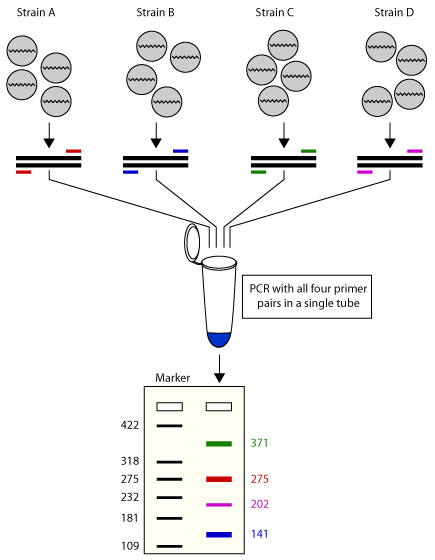
Syndromic testing refers to the simultaneous detection of multiple pathogens associated with a specific clinical syndrome, such as respiratory infections. These approaches rely heavily on multiplex PCR and integrated detection technologies. Foundational explanations of multiplex PCR can be found through the
National Human Genome Research Institute (NIH) and
University of Utah Learn Genetics.
Respiratory syndromic panels are commonly applied in:
-
Molecular diagnostics research
-
Assay verification and validation studies
-
Epidemiological surveillance projects
-
Laboratory workflow standardization
The public health relevance of multiplex respiratory testing is described by the
Centers for Disease Control and Prevention (CDC).

The Importance of Quality Control in Syndromic PCR Systems
Multiplex PCR systems introduce additional analytical complexity compared to single-target assays. Multiple primer and probe sets, complex reaction chemistries, and integrated detection systems must work in concert. As outlined by the
Clinical and Laboratory Standards Institute (CLSI), quality control is essential for verifying consistent assay performance in such systems.
Quality control materials help laboratories:
-
Verify correct amplification across multiple targets
-
Monitor instrument and cartridge performance
-
Detect technical deviations or system errors
-
Support reproducibility across runs and operators
General principles of in vitro diagnostic quality assurance are also discussed by the
U.S. Food and Drug Administration (FDA).
Understanding QIAstat-Dx® Quality Control Materials
QIAGEN® QIAstat-Dx® Quality Control materials are designed to evaluate the performance of syndromic PCR workflows using the QIAstat-Dx® platform. These controls are formulated to simulate real testing conditions while remaining standardized and traceable.
The molecular biology principles underlying quality control design are covered by
NCBI Bookshelf and
Khan Academy – PCR and RT-PCR.
Effective quality control materials typically demonstrate:
-
Defined nucleic acid targets compatible with multiplex assays
-
Stability across storage and testing conditions
-
Reproducible amplification behavior
-
Compatibility with integrated PCR detection systems
Types of Quality Controls in QIAstat-Dx® Workflows
Internal Controls
Internal controls are embedded within each test run to verify sample processing, nucleic acid extraction, amplification, and detection. The role of internal controls in molecular diagnostics is explained by
CDC Molecular Diagnostics Training.
External Quality Controls
External quality controls are processed separately from routine samples and assess the overall performance of the system. Concepts of external quality assessment are outlined by the
World Health Organization (WHO).
Positive and Negative Controls
Positive controls confirm correct detection of target sequences, while negative controls help identify contamination or non-specific signals. Best practices for control usage are described by
MIT OpenCourseWare – Molecular Biology.

Laboratory Applications of QIAstat-Dx® Quality Control
Assay Verification and Validation
Before routine implementation, laboratories verify system performance under local conditions. Quality controls support evaluation of accuracy, reproducibility, and analytical sensitivity. Validation frameworks are discussed by the
CDC Molecular Diagnostic Guidance.
Routine Performance Monitoring
Regular use of quality controls allows laboratories to track performance trends over time and identify deviations early. Continuous monitoring aligns with recommendations from the
CDC Laboratory Quality Management Systems.
Instrument and Cartridge Performance Assessment
Quality controls can reveal issues related to cartridge integrity, thermal cycling, or optical detection. Instrument performance principles are reviewed by
Cold Spring Harbor Laboratory DNA Learning Center.
Training and Competency Assessment
QIAstat-Dx® Quality Control materials are also used in training environments to demonstrate correct system operation and troubleshooting. Educational PCR resources are available from
HHMI BioInteractive and
NIH STEM Education.
Data Interpretation in Multiplex Syndromic PCR
In multiplex PCR systems, quality control data are evaluated through system-generated metrics such as amplification curves, Ct values, and internal control performance. Stable performance across runs indicates reliable system operation. Statistical considerations for PCR data analysis are discussed by
NCBI Biostatistics Reviews and
NIH Research Methods Resources.
Workflow Integration and Laboratory Standardization
Integrating quality control into routine QIAstat-Dx® workflows ensures immediate detection of technical issues and supports standardized molecular testing. Standardization and reproducibility principles are emphasized by the
National Academies of Sciences, Engineering, and Medicine.
Consistent quality control practices contribute to:
-
Increased confidence in multiplex PCR results
-
Improved inter-laboratory comparability
-
Enhanced documentation and traceability
These factors are particularly important in respiratory disease surveillance programs described by the
CDC Surveillance Resources.
Educational and Research Value
Beyond routine testing, QIAstat-Dx® Quality Control materials support:
-
Academic research into syndromic diagnostics
-
Comparative studies of multiplex PCR platforms
-
Training programs in molecular diagnostics
The role of quality assurance in reproducible science is discussed by the
National Institutes of Health (NIH).
QIAGEN® QIAstat-Dx® Quality Control
The QIAGEN® QIAstat-Dx® Quality Control is designed to support laboratories using the QIAstat-Dx® system for syndromic molecular testing. It provides a standardized reference for monitoring assay performance, validating workflows, and maintaining consistent detection across multiplex targets.
By incorporating this quality control into routine QIAstat-Dx® workflows, laboratories can strengthen confidence in syndromic PCR results, support standardized molecular practices, and maintain high analytical performance in respiratory disease research and molecular diagnostics.
QIAGEN QIAstat-Dx Quality Control, syndromic PCR quality control, multiplex PCR respiratory panel, molecular diagnostics quality assurance, sample-to-answer PCR control, respiratory syndromic testing, PCR assay validation, laboratory quality control multiplex PCR