
Introduction to Nucleotide Reagents in Molecular Biology
Nucleotides are fundamental biochemical molecules that play central roles in genetic information processing, cellular signaling, and energy transfer. Among the four ribonucleoside triphosphates used in RNA synthesis, GTP (Guanosine Triphosphate) is essential for numerous biological processes including RNA transcription, protein synthesis, and cellular regulatory pathways.
In molecular biology laboratories and biotechnology workflows, high-quality nucleotide reagents are required to ensure reliable experimental outcomes. One such reagent is GTP Tris Solution (GMP-grade), a highly purified guanosine triphosphate solution prepared in a Tris buffer system designed to maintain stability and consistent biochemical performance.
Background information about nucleotides and their biological functions can be explored through the National Center for Biotechnology Information (NCBI)
https://www.ncbi.nlm.nih.gov/
Educational materials describing nucleic acids and nucleotide chemistry are also available through the National Human Genome Research Institute (NHGRI)
https://www.genome.gov/
Additional learning resources explaining molecular biology fundamentals can be found at the National Institute of General Medical Sciences (NIGMS)
https://www.nigms.nih.gov/
General explanations of genetic material and nucleic acid structure are provided through MedlinePlus Genetics
https://medlineplus.gov/genetics/
Researchers studying nucleic acid technologies can also explore resources from the National Institutes of Health (NIH)
https://www.nih.gov/
What Is GTP Tris Solution (GMP-Grade)?
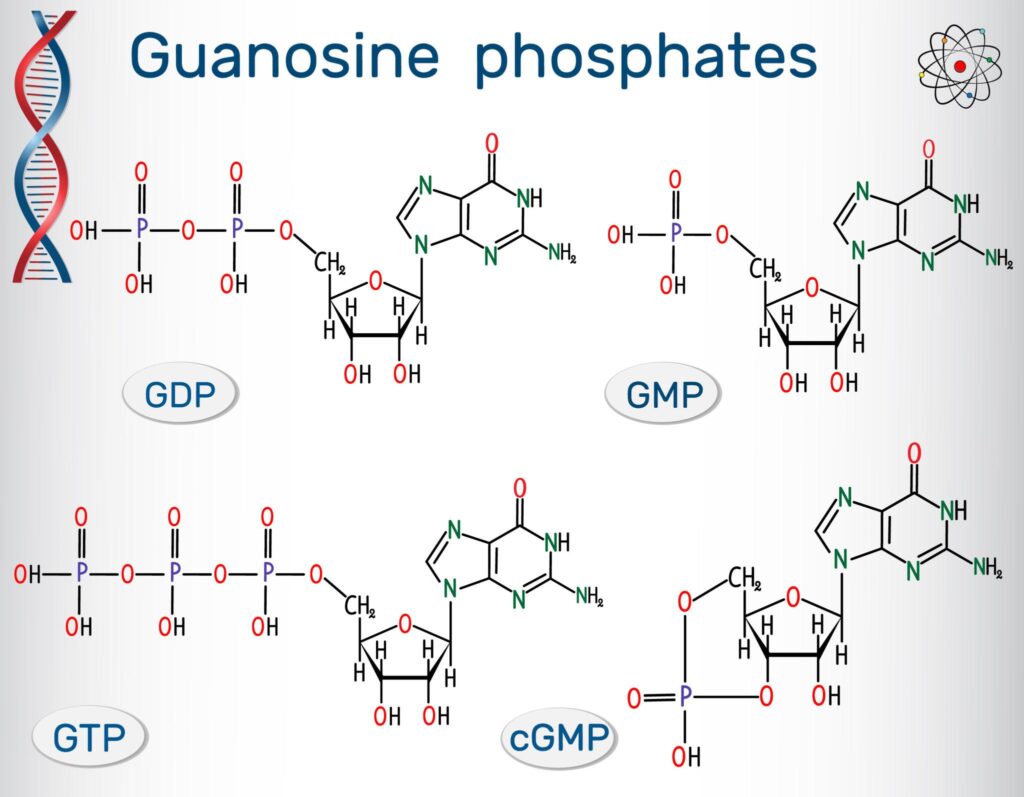
GTP Tris Solution (GMP-grade) is a high-purity aqueous solution of guanosine-5′-triphosphate dissolved in a Tris buffer system that maintains optimal pH and stability. The reagent is manufactured under Good Manufacturing Practice (GMP) conditions, ensuring controlled production, consistent quality, and traceable documentation.
In molecular biology research, GTP is commonly used as a component of ribonucleotide mixtures for RNA synthesis reactions, including in vitro transcription systems and other nucleic acid–related experiments.
Educational information about nucleotide metabolism and nucleic acid chemistry can be explored through the NCBI Bookshelf
https://www.ncbi.nlm.nih.gov/books/
Research resources related to biochemical molecules and metabolic pathways are also available through the National Institute of Biomedical Imaging and Bioengineering (NIBIB)
https://www.nibib.nih.gov/
Additional discussions on nucleotide chemistry and molecular interactions can be found through PubMed, maintained by the National Library of Medicine
https://pubmed.ncbi.nlm.nih.gov/
Chemical Structure and Molecular Characteristics of GTP
Guanosine triphosphate consists of three main components:
• Guanine base
• Ribose sugar
• Three phosphate groups
The triphosphate structure provides the molecule with high chemical energy, allowing it to participate in energy-dependent biochemical reactions.
Detailed information about nucleotide structure and biochemical energy transfer can be found through educational resources from MIT OpenCourseWare Biology
https://ocw.mit.edu/courses/biology/
Additional resources explaining nucleic acid biochemistry are available through the Protein Data Bank educational portal
https://www.rcsb.org/education
Protein-nucleotide interactions and molecular recognition mechanisms are discussed through Stanford University’s structural biology program
https://sbp.stanford.edu/
Importance of Tris Buffer in Nucleotide Solutions
The Tris (tris(hydroxymethyl)aminomethane) buffer is widely used in molecular biology due to its ability to maintain a stable pH environment. In GTP solutions, Tris buffer helps preserve nucleotide stability and prevents degradation during storage and experimental use.
The buffering system maintains appropriate conditions for enzymatic reactions involving nucleic acids.
Educational explanations of biochemical buffering systems can be explored through Cold Spring Harbor Laboratory educational resources
https://www.cshl.edu/
Research on buffer chemistry and biochemical reaction environments is also discussed through the National Institute of Standards and Technology (NIST)
https://www.nist.gov/
GMP-Grade Production and Quality Considerations
The designation GMP-grade indicates that the reagent has been produced following Good Manufacturing Practice guidelines, which include controlled production environments, documented manufacturing processes, and quality assurance procedures.
These standards help ensure that reagents maintain consistent purity and reproducibility across production batches.
Information about quality standards and manufacturing practices can be explored through the U.S. Food and Drug Administration (FDA)
https://www.fda.gov/
Research resources discussing manufacturing quality systems and analytical validation are also available through the National Institute of Standards and Technology
https://www.nist.gov/
Key Characteristics of GTP Tris Solution (GMP-Grade)
High-quality GTP Tris solutions used in molecular biology research typically provide several important features.
High Chemical Purity
The nucleotide is purified to remove contaminants that could interfere with enzymatic reactions.
Scientific resources on nucleic acid purification and analytical methods can be accessed through PubMed Central
https://www.ncbi.nlm.nih.gov/pmc/
Stable Buffer Environment
The Tris buffer maintains optimal pH stability to preserve nucleotide integrity during storage and experimental use.
Educational materials describing biochemical stability and reaction conditions can be found through Harvard University’s Molecular and Cellular Biology program
https://mcb.harvard.edu/
Compatibility with Enzymatic Reactions
GTP is widely used in enzymatic processes involving RNA synthesis and nucleic acid metabolism.
Biochemical research related to enzyme catalysis is discussed through Yale University’s Molecular Biophysics and Biochemistry Department
https://mbb.yale.edu/
Reliable Reproducibility
GMP-grade reagents support consistent experimental performance across multiple experiments and laboratories.
Laboratory reproducibility and experimental standardization principles are described through NIH training resources
https://www.training.nih.gov/
Biological Functions of GTP
In biological systems, GTP plays multiple important roles beyond serving as a nucleotide building block.
RNA Synthesis
GTP is incorporated into RNA molecules during transcription reactions.
Educational explanations of transcription mechanisms are available through the National Human Genome Research Institute
https://www.genome.gov/genetics-glossary/Transcription
Energy Transfer
Similar to ATP, GTP participates in biochemical energy transfer processes.
Research on cellular metabolism and nucleotide energy systems can be explored through NCBI biochemical pathway resources
https://www.ncbi.nlm.nih.gov/
Protein Synthesis
During translation, GTP molecules help drive conformational changes required for ribosomal function.
Information about ribosome structure and translation mechanisms can be found through the Protein Data Bank
https://www.rcsb.org/
Cellular Signaling
GTP-binding proteins play key roles in intracellular signaling pathways.
Educational materials on cell signaling pathways are provided by the National Institute of General Medical Sciences
https://www.nigms.nih.gov/
Applications of GTP Tris Solution in Molecular Biology
In Vitro Transcription Systems
GTP is an essential component of ribonucleotide mixtures used in RNA synthesis reactions.
Research programs related to RNA biology can be explored through the NIH Common Fund RNA initiatives
https://commonfund.nih.gov/
RNA Production Workflows
Researchers producing RNA molecules for experimental analysis frequently use nucleotide solutions such as GTP.
Educational materials describing RNA structure and function are available through NCBI Bookshelf
https://www.ncbi.nlm.nih.gov/books/
Enzymatic Reaction Systems
Many enzymes involved in nucleic acid metabolism require nucleoside triphosphates such as GTP.
Biochemical research resources related to enzymatic mechanisms are provided through Stanford University’s Biochemistry Department
https://chemistry.stanford.edu/
Molecular Biology Research
GTP solutions are commonly used in laboratory workflows involving RNA polymerases and nucleic acid synthesis.
Educational resources describing laboratory molecular biology techniques can be found through University of Wisconsin Biotechnology Center
https://biotech.wisc.edu/
Advantages of Using High-Quality GTP Solutions
Using high-purity nucleotide reagents provides several important benefits for molecular biology experiments.
• Consistent enzymatic reaction performance
• Reduced contamination risk
• Improved reproducibility of experimental results
• Reliable nucleic acid synthesis
• Compatibility with advanced molecular workflows
Scientific publications related to nucleotide chemistry and molecular biology research can be accessed through PubMed
https://pubmed.ncbi.nlm.nih.gov/
Best Practices for Handling Nucleotide Solutions
To maintain reagent quality and stability, laboratories often follow several handling guidelines.
• Store solutions at recommended temperatures
• Avoid repeated freeze-thaw cycles
• Use nuclease-free materials
• Protect solutions from contamination
Laboratory training resources and experimental best practices are described through the NIH Office of Intramural Training and Education
https://www.training.nih.gov/
Conclusion
GTP Tris Solution (GMP-grade) is a high-purity nucleotide reagent widely used in molecular biology and biotechnology laboratories. By combining guanosine triphosphate with a stable Tris buffering system, the solution provides reliable performance for nucleic acid synthesis and enzymatic reactions.
Because nucleotides are fundamental components of RNA synthesis and cellular biochemical processes, high-quality GTP reagents remain essential tools in modern molecular biology workflows.