
Polymerase chain reaction (PCR) technologies form the backbone of modern molecular research related to respiratory diseases. Their ability to selectively amplify nucleic acid targets with high sensitivity has enabled advances in pathogen discovery, assay development, surveillance research, and analytical validation. However, the reliability of PCR-based data is directly dependent on robust quality control (QC) strategies that verify assay performance at every stage of the workflow.
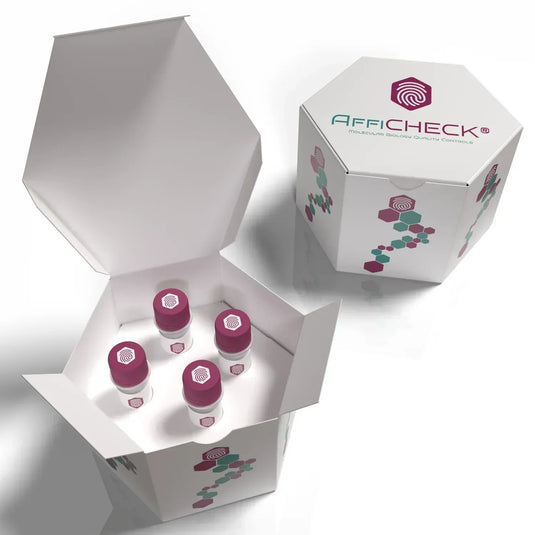
Respiratory Disease PCR Quality Control materials are designed to support molecular laboratories by providing standardized reference points for monitoring amplification integrity, detecting technical variability, and ensuring reproducible results over time. This comprehensive article explores PCR quality control from a laboratory science perspective, covering principles, materials, workflow integration, performance metrics, and long-term data assurance in respiratory disease research.
Molecular Basis of PCR in Respiratory Research
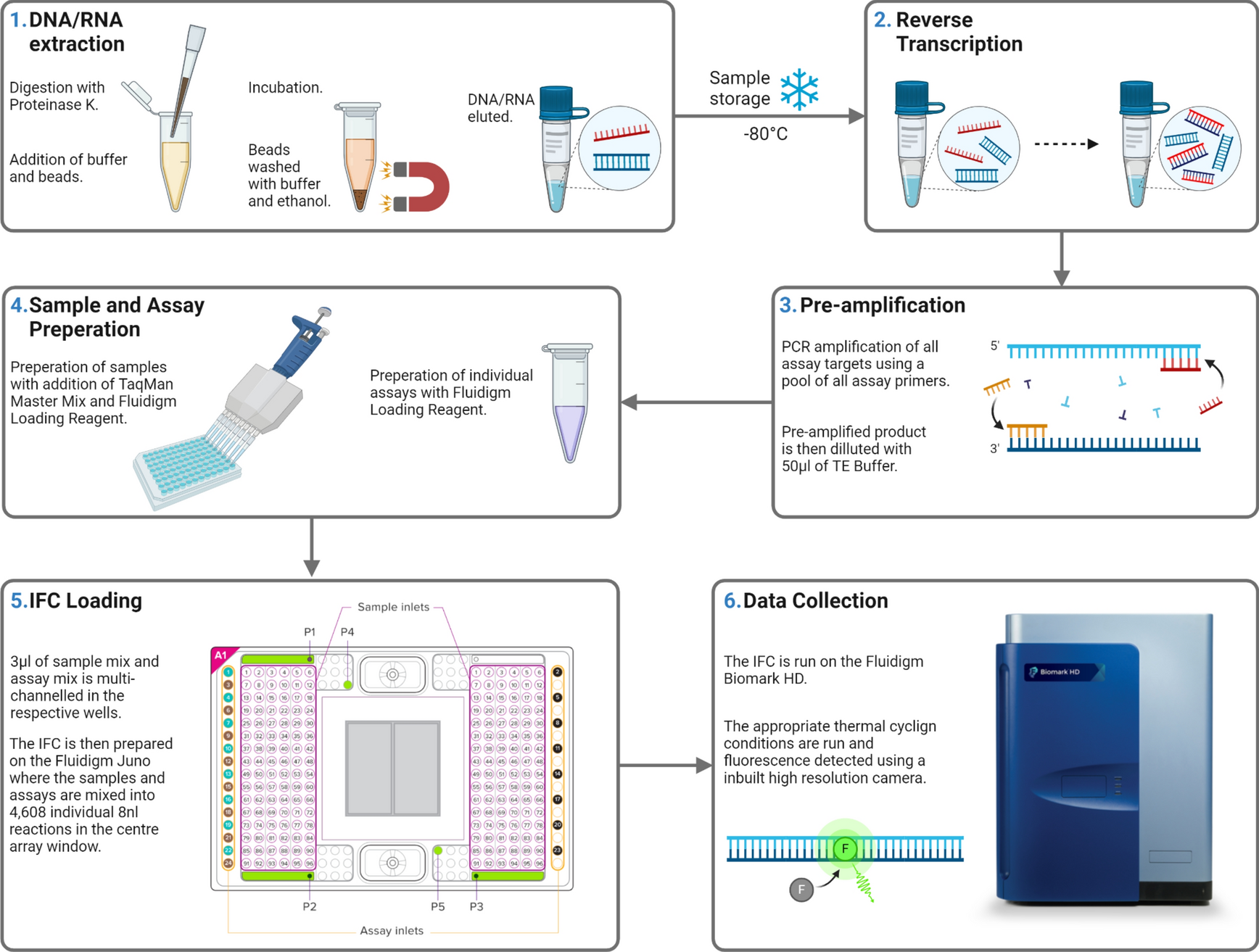
PCR functions through repeated cycles of denaturation, annealing, and extension, allowing exponential amplification of specific nucleic acid sequences. In respiratory disease research, PCR is widely used to study viruses and bacteria affecting the respiratory tract, many of which possess RNA or DNA genomes requiring precise amplification conditions.
Foundational PCR mechanisms are described by the National Human Genome Research Institute (NHGRI)
https://www.genome.gov/genetics-glossary/Polymerase-Chain-Reaction
and by the University of Utah Genetic Science Learning Center
https://learn.genetics.utah.edu/content/labs/pcr/
Advanced molecular amplification principles are also discussed in NIH educational resources
https://www.ncbi.nlm.nih.gov/books/
Why Respiratory Disease PCR Requires Specialized Quality Control
Respiratory specimens and model systems often present analytical challenges, including:
-
Low target abundance
-
High genetic variability among respiratory pathogens
-
Presence of amplification inhibitors
-
Multiplex assay complexity
These factors increase the importance of well-characterized QC materials that allow laboratories to distinguish true amplification behavior from technical artifacts.
The Centers for Disease Control and Prevention (CDC) highlights the need for standardized molecular quality systems
https://www.cdc.gov/labquality
Similarly, the National Institutes of Health (NIH) emphasizes quality control as essential for data integrity and reproducibility
https://www.nih.gov/research-training/rigor-reproducibility
Expanded Classification of PCR Quality Controls
External Positive Controls
External positive controls provide an independent verification that the PCR system is capable of detecting defined nucleic acid targets. In respiratory disease research, these controls are often used during assay setup, validation, and routine performance checks.
Educational explanations of external controls are provided by University of California laboratory manuals
https://bio.libretexts.org/
No-Template and Reagent Controls
No-template controls are indispensable for identifying contamination introduced during reagent preparation or workflow handling. Respiratory PCR workflows, particularly multiplex systems, are sensitive to even trace contamination.
Contamination prevention strategies are reviewed by NCBI
https://www.ncbi.nlm.nih.gov/pmc/articles/PMC2095096/
and by CDC molecular laboratory guidance
https://www.cdc.gov/dls

Internal Amplification and Process Controls
Internal controls monitor amplification efficiency within each reaction and help identify PCR inhibition caused by complex matrices or reagent interactions.
Mechanisms of PCR inhibition are detailed by the U.S. Food and Drug Administration (FDA)
https://www.fda.gov/medical-devices
and supported by NIH molecular assay resources
https://www.ncbi.nlm.nih.gov/
Multiplex PCR Quality Control in Respiratory Panels
Multiplex PCR is widely used in respiratory research to increase throughput and conserve sample material. However, multiplex systems require rigorous QC because amplification dynamics can differ significantly between targets.
Multiplex assay design fundamentals are described by Colorado State University
https://www.mip.colostate.edu/
The CDC also provides guidance on multiplex molecular testing
https://www.cdc.gov/laboratory
Quality control materials intended for respiratory disease PCR must demonstrate stable performance across multiple targets under multiplex conditions.
Quantitative Performance Metrics Monitored by PCR Quality Control
Respiratory Disease PCR Quality Control materials enable monitoring of critical analytical parameters, including:
-
Amplification efficiency
-
Cycle threshold (Ct) consistency
-
Signal linearity
-
Reproducibility across runs
The National Institute of Standards and Technology (NIST) provides guidance on measurement consistency and laboratory calibration
https://www.nist.gov/
Quantitative PCR performance evaluation is also discussed in academic resources from Harvard University
https://bio.harvard.edu/
Longitudinal Trend Analysis and Laboratory Monitoring
One of the most valuable roles of PCR quality control materials is long-term performance tracking. By analyzing QC results over time, laboratories can detect subtle shifts in assay behavior before they affect experimental outcomes.
The importance of trend analysis in laboratory quality systems is emphasized by Johns Hopkins University
https://publichealth.jhu.edu/
and by NIH quality assurance initiatives
https://oir.nih.gov/sourcebook/ethical-conduct/special-research-considerations
Integration into Laboratory Quality Management Systems
Respiratory Disease PCR Quality Control materials are most effective when integrated into a structured laboratory quality management system. These systems align molecular workflows with standardized documentation, performance monitoring, and corrective action procedures.
CDC laboratory quality assurance frameworks are outlined here:
https://www.cdc.gov/labquality/quality-assurance.html
ISO-aligned laboratory principles are summarized by NIST
https://www.nist.gov/laboratory-quality
Role in Assay Development and Method Optimization
During assay development, PCR quality control materials support:
-
Primer and probe optimization
-
Reaction condition refinement
-
Platform comparison studies
-
Analytical sensitivity assessment
The FDA’s analytical validation guidance provides a useful framework for performance evaluation
https://www.fda.gov/regulatory-information/search-fda-guidance-documents
Academic validation methodologies are also described by Stanford University
https://med.stanford.edu/
Training, Education, and Proficiency Testing
PCR Quality Control materials are widely used in training laboratories to teach molecular best practices, troubleshooting techniques, and performance interpretation.
Educational molecular training programs are available through the CDC
https://www.cdc.gov/labtraining
and supported by NIH research education initiatives
https://grants.nih.gov/policy
Stability, Storage, and Biosafety Considerations
Quality control materials are engineered to maintain nucleic acid stability under defined storage conditions. Proper handling ensures long-term consistency and minimizes degradation risk.
Nucleic acid storage principles are described by Yale University laboratory resources
https://medicine.yale.edu/
Biosafety guidance is provided by the CDC
https://www.cdc.gov/labs/biosafety.html
Research-Use Context and Scientific Integrity
Respiratory Disease PCR Quality Control materials are intended for research, development, and laboratory validation applications. They support system suitability testing and method verification but do not replace regulatory diagnostic pathways.
This distinction is clearly outlined by the NIH research policy framework
https://grants.nih.gov/policy
and reinforced by CDC laboratory use guidelines
https://www.cdc.gov/labtraining
Strengthening Molecular Confidence in Respiratory Research
Respiratory Disease PCR Quality Control materials provide laboratories with a reliable foundation for maintaining analytical rigor, reproducibility, and scientific confidence. When used systematically, they support high-quality molecular data generation across diverse respiratory research applications.
These materials are particularly valuable for:
-
Respiratory pathogen molecular research
-
PCR and qPCR assay development
-
Multiplex panel optimization
-
Quality assurance and training laboratories
By embedding standardized PCR quality control materials into routine workflows, laboratories reinforce data integrity, methodological transparency, and long-term analytical consistency, advancing respiratory disease research at the highest scientific standards.