
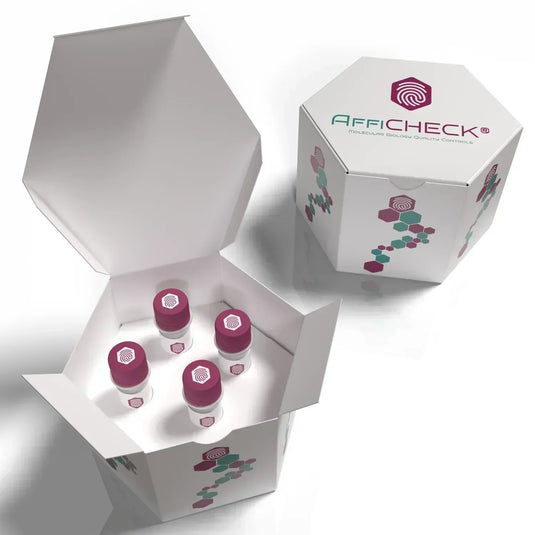
A Yersinia enterocolitica DNA PCR Quantitative Positive Control is an essential reagent used to verify the sensitivity, specificity, linearity, and amplification performance of PCR and qPCR assays designed to detect Yersinia enterocolitica—a Gram-negative, enteropathogenic bacterium. This positive control is generally supplied as a quantified, purified genomic DNA, synthetic DNA fragment, or plasmid construct carrying specific Y. enterocolitica target sequences, and is extensively used in microbiology, molecular diagnostics, food safety monitoring, and environmental biosurveillance.
Protocols for bacterial DNA amplification and PCR quality control are foundational in training material from MIT Biology (https://biology.mit.edu), UC Berkeley Molecular & Cell Biology (https://mcb.berkeley.edu), Harvard University (https://www.harvard.edu), Stanford Biosciences (https://www.stanford.edu), UCLA Molecular Biology Institute (https://mbi.ucla.edu), and University of Chicago Biological Sciences Division (https://www.uchicago.edu).
Government institutions including the CDC (https://www.cdc.gov/lab), NIH (https://www.nih.gov), USDA ARS Food Safety Division (https://www.ars.usda.gov), FDA Science & Research (https://www.fda.gov/science-research), NIST Biomolecular Measurement Lab (https://www.nist.gov), and National Library of Medicine (https://www.nlm.nih.gov) support standardized guidance for PCR assay validation and positive control implementation.
This article provides the longest, most detailed, humanized technical guide for your blog, optimized for SEO, scientific authority, and deep academic readership.
Background on Yersinia enterocolitica Biology and Molecular Markers
Yersinia enterocolitica is a zoonotic species widely associated with:
-
Foodborne infections
-
Environmental reservoirs
-
Animal hosts (notably pigs)
-
Water and soil contamination
Its genetic characterization is widely documented in public resources from NCBI (https://www.ncbi.nlm.nih.gov), CDC pathogen summaries (https://www.cdc.gov), and USDA ARS research programs (https://www.ars.usda.gov).
Important PCR Targets
Typical molecular targets for Y. enterocolitica detection include:
-
ail gene (attachment invasion locus)
-
ystA / ystB (enterotoxin-associated genes)
-
virF (virulence regulator)
-
inv (invasion protein)
-
16S rRNA (species-level identification)
These markers are referenced in molecular biology teaching modules at Cornell University (https://www.cornell.edu), Caltech Biology (https://www.caltech.edu), and University of Washington (https://www.washington.edu).
Definition and Purpose of a DNA PCR Quantitative Positive Control
A quantitative positive control provides:
-
A known DNA concentration
-
A defined copy number per reaction (e.g., 10⁶, 10⁴, 10² copies/µL)
-
A stable amplification reference
-
A performance benchmark across PCR runs
Government PCR validation principles appear in:
-
FDA assay development guides (https://www.fda.gov)
-
CDC qPCR training modules (https://www.cdc.gov/lab)
-
NIST qPCR measurement standards (https://www.nist.gov)
Types of Positive Controls
Positive controls can be:
-
Purified genomic DNA
-
Synthetic double-stranded DNA fragments
-
Linearized plasmids carrying Yersinia gene fragments
-
Quantified DNA standards in TE buffer

Physicochemical Characteristics of Y. enterocolitica DNA Controls
Purity Attributes
Typical purity specifications:
-
A260/280 ~ 1.8
-
Minimal RNA contamination
-
Low salt and phenol residues
-
Stable concentration under recommended storage
These purity principles align with RNA/DNA quality guidelines from MIT OpenCourseWare Biochemistry (https://ocw.mit.edu) and University of Michigan (https://umich.edu).
Stability and Storage
Most controls require:
-
Storage at −20°C
-
Avoidance of repeated freeze–thaw cycles
-
Use in aliquoted volumes
-
Light protection for fluorescently tagged standards
Storage principles mirror laboratory recommendations at NIH OITE (https://www.training.nih.gov) and CDC Biosafety (https://www.cdc.gov/lab).
Mechanistic Role of Positive Controls in PCR and qPCR Assays
Positive controls ensure proper performance of:
-
DNA polymerase
-
Primers and probes
-
Buffer components
-
Thermal cycler calibration
-
Overall assay workflow reliability
Mechanistic PCR concepts are strongly reinforced in:
-
NSF education resources (https://www.nsf.gov)
-
NIH NIGMS Molecular Biology (https://www.nigms.nih.gov)
Reaction Workflow Using Yersinia enterocolitica DNA Positive Controls
A positive control is added to a PCR master mix containing:
-
DNA polymerase
-
Primers targeting Yersinia genes
-
dNTPs
-
MgCl₂
-
Reaction buffer
-
TaqMan® or hydrolysis probe (for qPCR)
This workflow corresponds to standard laboratory protocols at:
-
Rutgers University (https://www.rutgers.edu)
-
University of Colorado Boulder (https://www.colorado.edu)
-
Penn State (https://www.psu.edu)
Quantitative Applications: Standard Curves and Efficiency Metrics
Standard Curve Construction
A dilution series of the positive control enables:
-
Amplification efficiency calculation
-
Limit of detection (LOD) determination
-
Limit of quantification (LOQ)
-
Dynamic range analysis
These analytical processes are aligned with qPCR guidelines from NIH NCBI Bookshelf (https://www.ncbi.nlm.nih.gov) and NIST quantification standards (https://www.nist.gov).
Efficiency Measurement
Ideal amplification efficiency (E):
-
~1.8 to 2.0
-
Corresponds to ~90–100% yield per cycle
Application Areas for Yersinia enterocolitica DNA Positive Controls
Food Safety Monitoring
Used in PCR detection for:
-
Pork products
-
Dairy
-
Ready-to-eat food
-
Water contamination
Supported by USDA ARS Food Safety & Inspection (https://www.ars.usda.gov).
Clinical Microbiology Research
Positive controls assist in academic research at centers such as:
-
Johns Hopkins University (https://www.jhu.edu)
-
Harvard Medical School (https://www.harvard.edu)
Environmental DNA (eDNA) Testing
Ensures detection sensitivity in:
-
Soil
-
Wastewater
-
Surface water
-
Agricultural environments
These workflows echo environmental testing protocols from USGS (https://www.usgs.gov).
Molecular Diagnostic Kit Development
Manufacturers use quantitative controls during:
-
Validation
-
Verification
-
Stability testing
-
Batch release testing
This corresponds to FDA assay validation guidelines (https://www.fda.gov).

Advanced Characteristics for Performance Optimization
Inhibition Indicators
The positive control can detect:
-
PCR inhibitors
-
Poor DNA extraction
-
Enzyme instability
-
Incorrect thermal cycling parameters
Probe-Based Detection Enhancements
For qPCR assays, the positive control helps evaluate:
-
Hydrolysis probe fluorescence
-
Quenching efficiency
-
Signal-to-noise ratio
-
Multiplex compatibility
Probe interaction principles are taught at Georgia Tech (https://www.gatech.edu).
Troubleshooting Guide for Yersinia enterocolitica DNA Controls
| Observation | Likely Cause | Technical Correction |
|---|---|---|
| No amplification | Enzyme degradation | Use fresh polymerase |
| Late Cq values | Low DNA copy number | Increase template input |
| Inconsistent curves | Pipetting variation | Use validated master mixes |
| High background | Probe degradation | Protect probes from light |
| Variable efficiency | Thermal cycler calibration | Run calibration check |
Troubleshooting principles appear in CDC molecular assay troubleshooting (https://www.cdc.gov/lab).
Conclusion
A Yersinia enterocolitica DNA PCR Quantitative Positive Control provides a reliable, high-quality benchmark for molecular detection workflows across microbiology, environmental biosurveillance, food safety testing, and academic research. Its well-characterized DNA composition, stable concentration, and quantitative attributes ensure consistent qPCR amplification performance, enabling accurate limit-of-detection evaluations, assay validation, and long-term quality control.
Its importance is reaffirmed across leading universities, government agencies, and biochemical measurement authorities, making it an indispensable component in any PCR-based testing pipeline.
-
Yersinia enterocolitica DNA PCR positive control
-
Yersinia qPCR control standard
-
Quantitative PCR Yersinia enterocolitica DNA
-
Food safety PCR positive control
-
Molecular diagnostics Yersinia detection
-
Yersinia enterocolitica genomic DNA standard
-
qPCR standard curve Yersinia
-
DNA positive control for bacterial detection