
Introduction
Avian Infectious Bursal Disease (IBD), widely known in poultry science as Gumboro disease, represents one of the most extensively studied viral conditions affecting chickens and other avian species. In research settings, IBD has become an important experimental model for understanding avian immunology, viral pathogenesis, and lymphoid tissue biology.
The virus responsible for this condition, Infectious Bursal Disease Virus (IBDV), selectively targets the bursa of Fabricius, a specialized immune organ unique to birds. Because the bursa plays a central role in B-lymphocyte maturation, the virus provides a valuable system for exploring the molecular mechanisms that regulate immune development.
Researchers studying avian virology, veterinary immunology, molecular biology, and poultry science frequently analyze IBDV in order to better understand:
-
RNA virus evolution
-
host–pathogen interactions
-
immune cell differentiation
-
viral replication mechanisms
Educational resources explaining the biology of poultry viruses and avian immune systems can be explored through the United States Department of Agriculture (USDA)
https://www.usda.gov
Additional academic materials on poultry diseases and avian biology are available from the University of Georgia Poultry Science Department
https://poultry.caes.uga.edu/
Veterinary virology training and research programs can also be found at the Cornell University College of Veterinary Medicine
https://www.vet.cornell.edu/
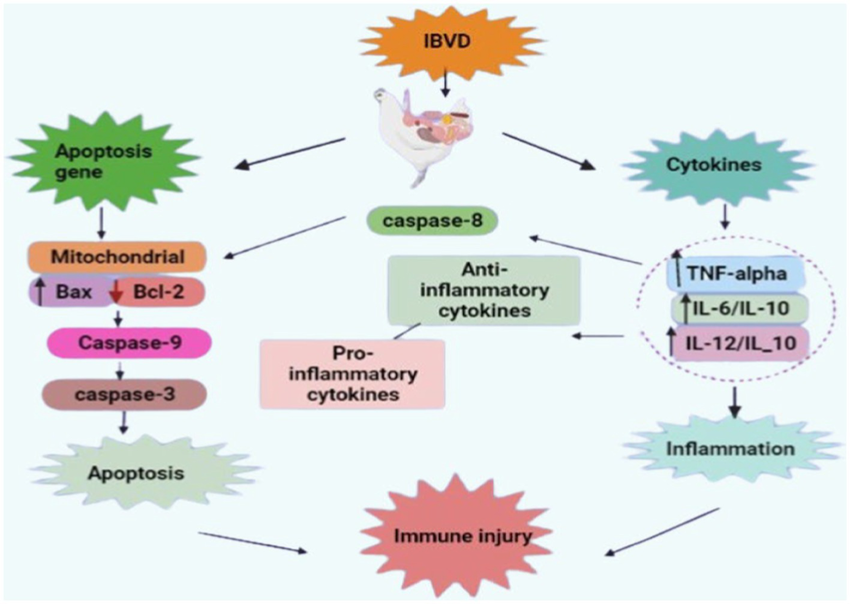
Historical Background of Infectious Bursal Disease Research
The disease now referred to as Infectious Bursal Disease was first described in the early 1960s near the town of Gumboro, Delaware, which led to the commonly used name Gumboro disease. Since its initial identification, the virus has attracted major scientific interest because of its unique effect on avian lymphoid tissues.
Over time, research laboratories around the world have investigated the molecular biology of IBDV, leading to significant discoveries regarding viral genome organization, viral capsid structure, and immune system interactions.
Historical and scientific documentation on avian viral diseases can be explored through the National Library of Medicine
https://www.nlm.nih.gov/
Comprehensive genomic research databases are maintained by the National Center for Biotechnology Information (NCBI)
https://www.ncbi.nlm.nih.gov/
Educational materials on RNA viruses and viral genome structure are also available from the National Institutes of Health (NIH)
https://www.nih.gov/
Taxonomy and Classification of Infectious Bursal Disease Virus
The causative agent of Avian Infectious Bursal Disease is Infectious Bursal Disease Virus (IBDV), a member of the Birnaviridae family.
Viruses belonging to this family share several defining characteristics:
-
Non-enveloped viral particles
-
Double-stranded RNA genomes
-
Segmented genomic structure
-
Icosahedral capsid symmetry
IBDV is classified within the genus Avibirnavirus, which includes viruses that specifically infect avian hosts.
Taxonomic classification of viruses is maintained by international virology databases such as those described by the National Institutes of Health
https://www.nih.gov/
Further educational resources on virus classification are provided by MIT Biology
https://biology.mit.edu/
Researchers studying viral genome structure can also access molecular virology resources from Stanford University School of Medicine
https://med.stanford.edu/
Molecular Structure of IBDV
The genome of Infectious Bursal Disease Virus is divided into two double-stranded RNA segments, referred to as Segment A and Segment B.
Segment A
Segment A encodes several viral proteins including:
-
VP2 – major capsid protein involved in antigenicity
-
VP3 – structural protein interacting with viral RNA
-
VP4 – viral protease responsible for polyprotein processing
-
VP5 – non-structural protein associated with virus release
Segment B
Segment B encodes VP1, the RNA-dependent RNA polymerase, which is essential for viral genome replication.
Detailed genomic information about viral RNA replication can be explored through the National Human Genome Research Institute
https://www.genome.gov/
Educational virology programs examining viral genome replication are conducted by the University of California Davis School of Veterinary Medicine
https://www.vetmed.ucdavis.edu/
The Bursa of Fabricius and Avian Immune System Development
A defining feature of IBDV research is the virus’s interaction with the bursa of Fabricius, an immune organ located near the cloaca of birds.
The bursa is responsible for B-cell maturation, a process essential for antibody production in the avian immune system.
Because of this biological role, the bursa has become an important focus in research areas such as:
-
immune organ development
-
lymphocyte differentiation
-
adaptive immune system evolution
Educational resources explaining immune system development are provided by Harvard University’s Department of Molecular and Cellular Biology
https://mcb.harvard.edu/
Further academic material on avian immunology is available through North Carolina State University Poultry Science Program
https://poultry.ces.ncsu.edu/
Additional immunology research programs can be explored at Yale School of Medicine
https://medicine.yale.edu/
Viral Replication and Host–Virus Interactions
The replication cycle of Infectious Bursal Disease Virus has been extensively studied in molecular virology laboratories.
The viral replication process generally involves:
-
Attachment of the virus to host cells
-
Entry into lymphoid cells within the bursa
-
Release of viral RNA genome
-
Replication by RNA-dependent RNA polymerase
-
Assembly of new viral particles
-
Release from infected cells
These processes allow researchers to explore fundamental biological questions about RNA virus replication and host cell responses.
Educational information about viral replication strategies can be accessed through Johns Hopkins University School of Medicine
https://www.hopkinsmedicine.org/
Further molecular virology resources are available from University of Michigan Medical School
https://medicine.umich.edu/
Global Research on Avian Viral Pathogens
Because poultry production represents a major agricultural sector worldwide, avian viral diseases are widely investigated by research institutions and agricultural laboratories.
International organizations supporting poultry health research include the Food and Agriculture Organization of the United Nations (FAO)
https://www.fao.org/
Global animal health programs are coordinated by the World Organisation for Animal Health (WOAH)
https://www.woah.org/
These organizations collaborate with universities and veterinary institutes to advance scientific understanding of poultry pathogens.
Additional research information about agricultural animal health can be found through the United States Department of Agriculture Animal and Plant Health Inspection Service
https://www.aphis.usda.gov/
Laboratory Techniques Used in IBD Research
Research laboratories studying Avian Infectious Bursal Disease Virus use multiple analytical methods to investigate viral biology and immune responses.
ELISA-Based Research Methods
Enzyme-Linked Immunosorbent Assay (ELISA) techniques are widely used in research laboratories to study viral proteins or immune responses associated with IBDV.
Educational descriptions of immunoassay technologies are available from the National Institute of Biomedical Imaging and Bioengineering
https://www.nibib.nih.gov/
Additional laboratory immunology resources are available from University of Washington Department of Immunology
https://immunology.washington.edu/
PCR and Molecular Detection
Polymerase Chain Reaction (PCR) techniques are commonly used in molecular virology research to analyze viral RNA and characterize viral strains.
Educational PCR resources are provided by the National Science Foundation
https://www.nsf.gov/
Further molecular genetics training materials are available through Stanford University Genetics Department
https://med.stanford.edu/genetics.html
Histopathological Analysis
Histological examination of bursal tissue allows researchers to study structural changes in lymphoid organs.
Microscopy and tissue analysis training programs are available at the University of Pennsylvania School of Veterinary Medicine
https://www.vet.upenn.edu/
Additional pathology education resources are provided by Iowa State University Veterinary Diagnostic Laboratory
https://www.vetmed.iastate.edu/
Genomic and Bioinformatics Research
Advances in genomic sequencing and computational biology have greatly expanded the study of IBDV genetic diversity.
Researchers now analyze viral genomes to investigate:
-
genetic variation among viral strains
-
mutation patterns in viral capsid proteins
-
evolutionary relationships among viruses
Bioinformatics databases used in viral genomics research are maintained by the European Bioinformatics Institute
https://www.ebi.ac.uk/
Additional genomic research tools are available from the National Institutes of Health Genome Data Science programs
https://datascience.nih.gov/
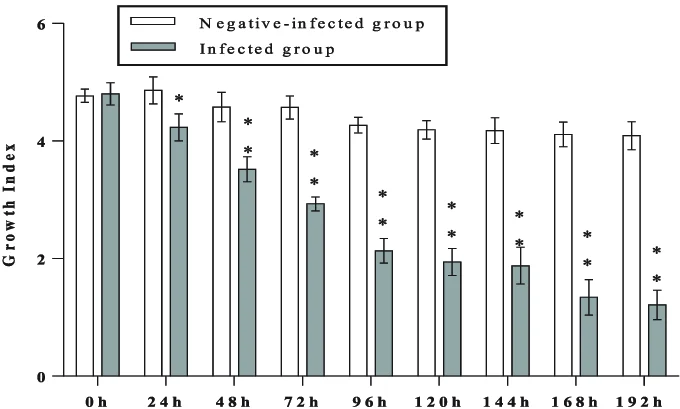
Research Applications in Poultry Science
Research tools designed for studying Avian Infectious Bursal Disease support a wide variety of scientific investigations.
These investigations often focus on:
-
immune system development in birds
-
viral protein structure and antigenicity
-
RNA virus replication mechanisms
-
host immune signaling pathways
Academic programs studying poultry biology and veterinary science are conducted by institutions such as Texas A&M University College of Veterinary Medicine
https://vetmed.tamu.edu/
Further poultry research programs are available at Auburn University Poultry Science Department
https://poultry-science.auburn.edu/
Importance of High-Quality Laboratory Research Reagents
Reliable laboratory reagents play an essential role in ensuring consistent and reproducible scientific experiments.
Research products designed for the investigation of Avian Infectious Bursal Disease support laboratory workflows involving:
-
viral antigen detection
-
molecular biology experiments
-
immunological assays
-
viral genome analysis
Laboratory biosafety and research standards are described by the NIH Office of Science Policy
https://osp.od.nih.gov/
Guidelines for laboratory safety practices are also provided by the Centers for Disease Control and Prevention Biosafety Program
https://www.cdc.gov/labs/BMBL.html
Conclusion
Avian Infectious Bursal Disease remains one of the most important subjects of investigation in poultry science, veterinary virology, and avian immunology research. The virus’s selective interaction with the bursa of Fabricius and developing B-cells makes it a valuable experimental model for studying immune system biology.
Through the use of modern molecular biology tools, immunological assays, and genomic sequencing technologies, scientists continue to expand our understanding of IBDV structure, replication mechanisms, and host immune responses.
Research tools designed for studying Avian Infectious Bursal Disease support universities, veterinary research institutes, and agricultural laboratories worldwide as they explore the complex biology of avian viral pathogens.
Infectious Bursal Disease Virus research
IBDV molecular biology
avian immunology research
poultry virology studies
bursa of Fabricius research
avian viral pathogen research
poultry virus laboratory studies
IBDV genomic analysis
avian immunology laboratory research