
Introduction to Target Enrichment Technologies
Modern molecular biology and genomics research often requires the analysis of specific DNA regions within complex genomic samples. Because whole genomes contain millions to billions of base pairs, scientists frequently use target enrichment technologies to selectively isolate DNA sequences of interest before sequencing or analysis.
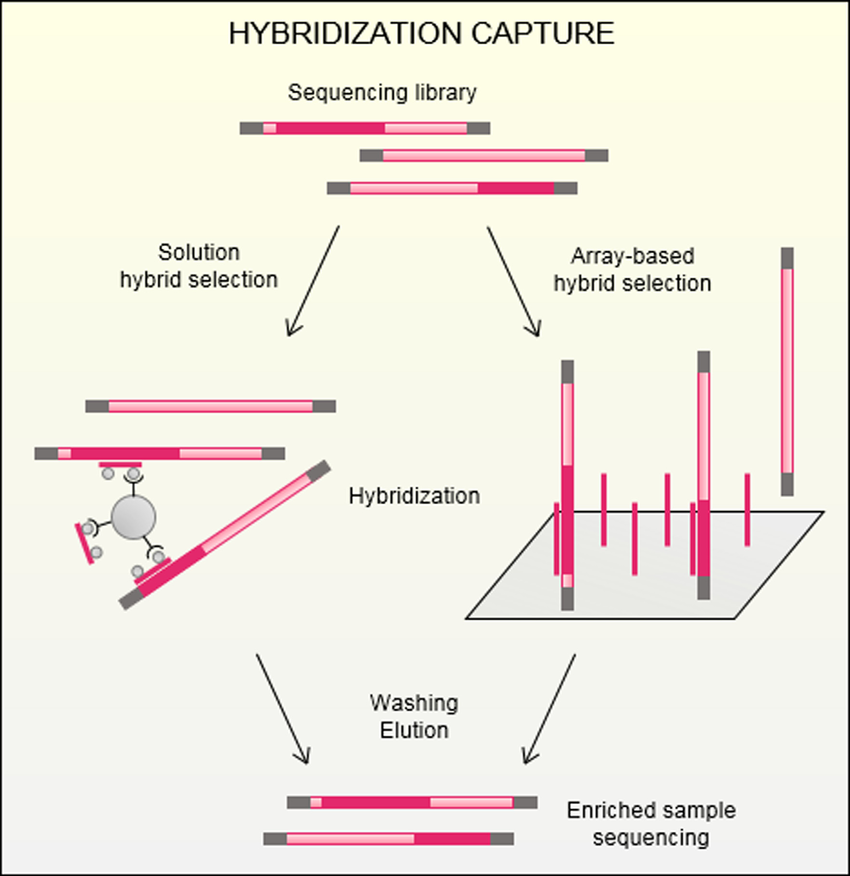
One widely used strategy is hybrid capture, also known as capture hybridization, which relies on complementary nucleic acid probes that bind to target sequences. After hybridization, captured DNA fragments are isolated and purified through specialized washing procedures.
To support these workflows, laboratories use specialized reagent systems such as the Capture Hybridization & Wash Kit, which provides optimized buffers and reagents designed to facilitate efficient hybridization, capture, and washing of nucleic acid targets.
Fundamental background on genomics and DNA analysis can be explored through the National Center for Biotechnology Information (NCBI)
https://www.ncbi.nlm.nih.gov/
Educational resources on genomic sequencing technologies are available through the National Human Genome Research Institute (NHGRI)
https://www.genome.gov/
Additional information on molecular biology research methods can be found through the National Institute of General Medical Sciences (NIGMS)
https://www.nigms.nih.gov/
Researchers studying DNA sequencing technologies can also consult resources from the National Institutes of Health (NIH)
https://www.nih.gov/
General educational materials explaining genetic information and DNA structure are available through MedlinePlus Genetics
https://medlineplus.gov/genetics/
What Is a Capture Hybridization & Wash Kit?
A Capture Hybridization & Wash Kit is a reagent system designed to support target enrichment workflows based on nucleic acid hybridization. The kit typically contains optimized buffers that facilitate:
• Hybridization of capture probes to target DNA
• Stabilization of probe-target complexes
• Removal of non-target DNA through controlled washing steps
• Preparation of captured DNA fragments for downstream analysis
These kits are commonly used in workflows involving:
• Next-generation sequencing (NGS) target enrichment
• Targeted gene panel sequencing
• Exome sequencing
• DNA variant analysis
• Genomic research studies
An overview of genomic sequencing and target enrichment strategies is available through the National Library of Medicine educational resources
https://www.ncbi.nlm.nih.gov/books/
Research on sequencing technologies can also be explored through the National Institute of Biomedical Imaging and Bioengineering
https://www.nibib.nih.gov/
The Principle of Capture Hybridization
Capture hybridization relies on the ability of complementary nucleic acid strands to form stable double-stranded structures.
The general process involves several steps:
-
DNA fragments are prepared from a biological sample.
-
Synthetic probes complementary to target sequences are introduced.
-
Hybridization occurs between probes and target DNA fragments.
-
Captured fragments are isolated using magnetic beads or affinity systems.
-
Wash buffers remove unbound or non-specific DNA fragments.
Educational explanations of nucleic acid hybridization can be found through NCBI molecular biology resources
https://www.ncbi.nlm.nih.gov/pmc/
Research on DNA base pairing and hybridization mechanisms is also discussed through the National Institute of Standards and Technology (NIST)
https://www.nist.gov/
Additional scientific literature on nucleic acid chemistry is accessible through PubMed
https://pubmed.ncbi.nlm.nih.gov/
Key Components of a Capture Hybridization & Wash Kit
Although formulations vary between kits, most Capture Hybridization & Wash Kits contain several essential reagents.
Hybridization Buffer
The hybridization buffer provides optimal conditions for probe-target binding by maintaining the appropriate salt concentration, pH, and temperature stability.
Educational materials describing nucleic acid hybridization chemistry can be found through MIT OpenCourseWare Biology
https://ocw.mit.edu/courses/biology/
Wash Buffers
Wash buffers remove non-specifically bound DNA fragments while preserving probe-target hybrids.
These buffers are carefully optimized to control stringency during washing.
Scientific discussions about nucleic acid purification and separation techniques are available through Cold Spring Harbor Laboratory educational resources
https://www.cshl.edu/
Blocking Reagents
Some capture workflows include blocking reagents to reduce non-specific interactions and improve enrichment specificity.
Research on molecular interactions and nucleic acid binding is available through Harvard University’s Molecular and Cellular Biology program
https://mcb.harvard.edu/

Capture Hybridization Workflow
A typical capture hybridization workflow includes several key steps.
1. Library Preparation
DNA fragments are prepared and adapters are added to create sequencing libraries.
Educational information about DNA library preparation is available through the National Human Genome Research Institute
https://www.genome.gov/
2. Probe Hybridization
Capture probes designed to match specific genomic regions are mixed with the prepared DNA library.
Hybridization occurs when complementary sequences bind.
Research describing probe-based hybridization strategies can be explored through NCBI research articles
https://www.ncbi.nlm.nih.gov/pmc/
3. Capture of Hybridized DNA
Hybridized DNA fragments are often captured using magnetic beads coated with molecules that recognize probe labels.
Magnetic separation technologies used in biotechnology are discussed through the National Nanotechnology Initiative
https://www.nano.gov/
Additional information on magnetic nanoparticle technologies can be found through the National Science Foundation
https://www.nsf.gov/
4. Washing Steps
The Capture Hybridization & Wash Kit provides buffers that remove non-target DNA while preserving hybridized fragments.
Laboratory purification techniques used in molecular biology research are described through Lawrence Berkeley National Laboratory
https://www.lbl.gov/
5. Enriched DNA Recovery
The captured DNA fragments are then recovered and prepared for downstream analysis such as sequencing.
Research on genomic data analysis and sequencing technologies is available through the National Institutes of Health Genome Research Programs
https://commonfund.nih.gov/
Applications of Capture Hybridization Kits
Capture Hybridization & Wash Kits are widely used in molecular biology and genomics laboratories.
Targeted Gene Sequencing
Researchers use capture hybridization to enrich specific gene regions prior to sequencing.
Educational information about targeted sequencing strategies can be explored through the National Human Genome Research Institute
https://www.genome.gov/genetics-glossary/Sequencing
Exome Sequencing
Whole-exome sequencing focuses on the coding regions of the genome.
These regions represent a small portion of the genome but contain a large proportion of functional genetic information.
Additional educational materials on exome sequencing are available through NCBI educational resources
https://www.ncbi.nlm.nih.gov/books/
Genomic Variant Analysis
Target enrichment allows researchers to analyze specific genomic regions for sequence variation.
Research databases describing genomic variation are maintained by the National Center for Biotechnology Information
https://www.ncbi.nlm.nih.gov/snp/
Molecular Biology Research
Hybrid capture technologies are widely used in genomic mapping and gene characterization studies.
Resources on genome mapping and DNA analysis are available through Stanford University’s Genome Technology Center
https://genome.stanford.edu/

Advantages of Capture Hybridization Technology
Hybrid capture technology offers several advantages for targeted sequencing workflows.
• Highly specific target enrichment
• Compatibility with next-generation sequencing platforms
• Scalable workflows for different panel sizes
• Efficient enrichment of rare DNA sequences
• Improved sequencing coverage of selected genomic regions
Research literature on next-generation sequencing technologies can be accessed through PubMed Central
https://www.ncbi.nlm.nih.gov/pmc/
Best Practices for Hybrid Capture Experiments
To obtain optimal performance in hybrid capture workflows, researchers often follow several key practices:
• Use high-quality DNA samples
• Optimize hybridization temperature and incubation time
• Maintain proper buffer conditions
• Perform stringent wash steps to reduce background
• Validate enrichment efficiency before sequencing
Laboratory experimental design strategies are discussed in NIH training resources
https://www.training.nih.gov/
Conclusion
The Capture Hybridization & Wash Kit plays a critical role in modern genomics workflows by enabling efficient enrichment of specific DNA sequences from complex genomic samples. Through optimized hybridization and washing conditions, these kits support reliable capture of target DNA regions for downstream sequencing and analysis.
Because targeted sequencing approaches continue to expand across genomics and molecular biology research, capture hybridization technologies remain an important component of advanced genomic analysis workflows.
Researchers interested in further learning about genomic technologies, DNA hybridization, and sequencing strategies can explore the following educational platforms: