
Introduction to Epitope Tagging in Molecular Biology
Protein tagging strategies are essential tools in modern molecular biology and biotechnology. Scientists often attach short peptide tags to recombinant proteins so they can easily track, purify, and analyze the proteins during experiments. One of the most widely used peptide tags is the DYKDDDDK epitope, commonly known as the FLAG tag.
The FLAG tag is a short, hydrophilic peptide that allows proteins to be selectively recognized by highly specific antibodies. This recognition forms the basis of numerous experimental techniques used in molecular biology laboratories.
A comprehensive overview of protein expression technologies and recombinant DNA strategies can be explored through the National Center for Biotechnology Information (NCBI)
https://www.ncbi.nlm.nih.gov/
Foundational information about genomics and protein science is also available through the National Human Genome Research Institute
https://www.genome.gov/
Educational materials explaining protein function and cellular biology are provided by the National Institute of General Medical Sciences (NIGMS)
https://www.nigms.nih.gov/
Further background on genetic information and molecular biology concepts can be found through MedlinePlus Genetics
https://medlineplus.gov/genetics/
Researchers studying protein structure and molecular function can also consult the Protein Data Bank educational portal
https://www.rcsb.org/education
To isolate and analyze FLAG-tagged proteins efficiently, many laboratories rely on Anti-DYKDDDDK (FLAG) Magnetic Beads, which combine antibody affinity recognition with magnetic separation technology.
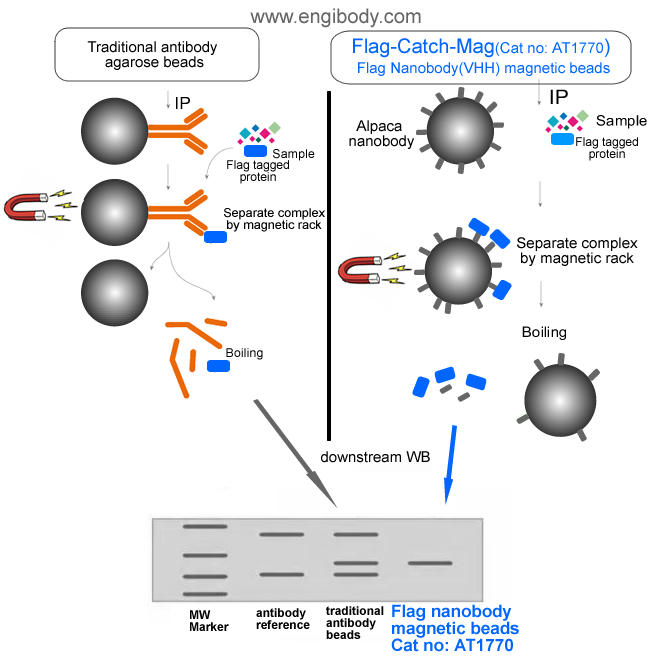
Overview of Anti-DYKDDDDK (FLAG) Magnetic Beads
Anti-DYKDDDDK (FLAG) Magnetic Beads are specialized affinity reagents designed for the selective capture of FLAG-tagged proteins. These beads consist of superparamagnetic particles coated with monoclonal antibodies that recognize the DYKDDDDK epitope sequence.
When the beads are incubated with a biological sample, the antibodies bind specifically to the FLAG tag present on recombinant proteins. A magnetic separator can then be used to isolate the beads and the captured proteins quickly and efficiently.
Magnetic bead-based purification technologies have become widely used because they simplify protein purification workflows and reduce experimental complexity.
Research on biomolecular separation techniques is discussed by the National Institute of Standards and Technology (NIST)
https://www.nist.gov/
Advances in magnetic nanoparticle technologies used in biotechnology are described through the National Nanotechnology Initiative
https://www.nano.gov/
Research literature on biomolecular purification methods can be accessed through PubMed, maintained by the National Library of Medicine
https://pubmed.ncbi.nlm.nih.gov/
Additional information about analytical technologies in biotechnology can be found through the National Institute of Biomedical Imaging and Bioengineering
https://www.nibib.nih.gov/
The FLAG Tag: Structure and Molecular Properties
The FLAG tag (DYKDDDDK) is an eight-amino-acid peptide sequence that was originally developed to facilitate detection and purification of recombinant proteins. Because of its small size, the FLAG tag typically does not interfere with protein folding or biological activity.
Several properties make the FLAG tag highly advantageous for experimental research:
• Small peptide sequence
• Strong antibody recognition
• Minimal interference with protein structure
• Compatibility with multiple detection systems
• Versatile placement at N- or C-terminus
The biochemical basis of protein structure and peptide interactions is discussed in educational materials from the National Institutes of Health
https://www.nih.gov/
Protein sequence analysis tools and databases are maintained by the National Center for Biotechnology Information
https://www.ncbi.nlm.nih.gov/protein
Additional educational information about protein chemistry and biomolecular interactions can be found through MIT OpenCourseWare Biology resources
https://ocw.mit.edu/courses/biology/
Structural biology resources are also available through Stanford University’s structural biology program
https://sbp.stanford.edu/

Magnetic Bead Technology in Protein Purification
Magnetic beads are microscopic particles containing a magnetic core surrounded by a surface that can be functionalized with biological molecules such as antibodies, proteins, or nucleic acids.
In the case of Anti-DYKDDDDK magnetic beads, monoclonal antibodies specific to the FLAG epitope are immobilized on the bead surface.
When the beads are added to a sample containing FLAG-tagged proteins:
-
The antibody binds the FLAG epitope
-
The protein attaches to the bead surface
-
A magnet collects the beads
-
Unbound proteins are removed
Magnetic bead separation systems are commonly used in biotechnology research due to their speed and simplicity.
Research on magnetic nanoparticles in biotechnology can be explored through the National Science Foundation Nanotechnology Program
https://www.nsf.gov/
Additional resources on nanomaterials used in biomedical research are provided by the U.S. Department of Energy Office of Science
https://science.osti.gov/
Scientific literature on magnetic particle technologies can be accessed through PubMed Central
https://www.ncbi.nlm.nih.gov/pmc/
Further discussions of laboratory separation technologies can be found through Lawrence Berkeley National Laboratory research programs
https://www.lbl.gov/
Key Characteristics of Anti-FLAG Magnetic Beads
High-quality Anti-DYKDDDDK magnetic beads are designed to provide optimal performance across multiple laboratory workflows.
High Binding Specificity
The monoclonal antibodies immobilized on the beads recognize the FLAG epitope with strong affinity, ensuring selective capture of FLAG-tagged proteins.
Educational resources describing antibody-antigen recognition mechanisms are available through the National Institute of Allergy and Infectious Diseases
https://www.niaid.nih.gov/
Rapid Magnetic Separation
Magnetic beads allow rapid isolation of proteins without centrifugation or filtration.
Researchers simply apply a magnetic rack to collect the beads while removing unwanted components.
Laboratory techniques used in biomolecular separation are discussed by Cold Spring Harbor Laboratory educational resources
https://www.cshl.edu/
Compatibility with Various Experimental Systems
Anti-FLAG magnetic beads can be used with proteins expressed in:
• Bacterial systems
• Yeast expression systems
• Insect cell systems
• Mammalian cell cultures
An overview of recombinant protein expression systems can be explored through the University of Wisconsin Biotechnology Center
https://biotech.wisc.edu/
Educational materials about protein expression technologies are also provided by Harvard University Molecular and Cellular Biology
https://mcb.harvard.edu/
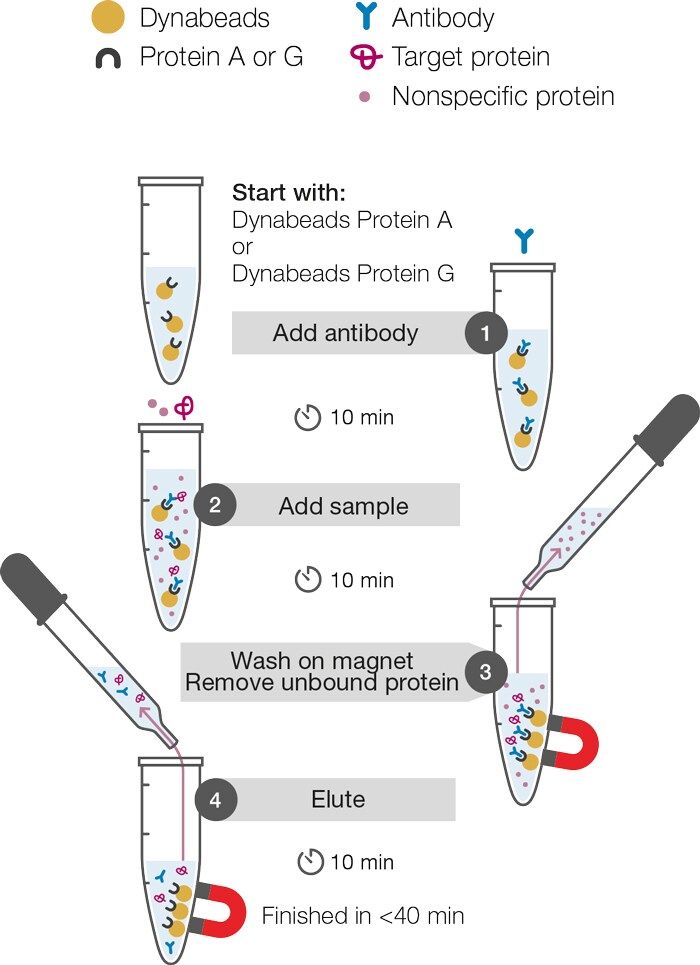
Typical Experimental Workflow Using Anti-FLAG Magnetic Beads
A standard purification workflow typically involves several simple steps.
1. Protein Expression
Cells are engineered to express a protein containing a FLAG epitope tag.
Genetic engineering techniques used in recombinant protein production are explained by the National Human Genome Research Institute
https://www.genome.gov/genetics-glossary/Recombinant-DNA
2. Cell Lysis
Cells are lysed to release proteins into solution.
Educational information about cell structure and biochemical processes can be found through Yale University’s Molecular Biophysics and Biochemistry Department
https://mbb.yale.edu/
3. Binding to Magnetic Beads
The lysate is incubated with Anti-FLAG magnetic beads so the tagged proteins bind to the antibody.
Protein-protein recognition and binding mechanisms are described through the National Institutes of Health training resources
https://www.training.nih.gov/
4. Magnetic Separation
A magnetic rack collects the beads, allowing contaminants to be removed.
5. Washing
Several washing steps remove non-specific proteins.
6. Elution
The FLAG-tagged protein can be released using:
• FLAG peptide competition
• pH-based elution
• denaturing buffers
Laboratory purification techniques are described in research materials available through NCBI experimental protocol databases
https://www.ncbi.nlm.nih.gov/books/
Applications of Anti-DYKDDDDK Magnetic Beads
Recombinant Protein Purification
FLAG magnetic beads are widely used to purify proteins expressed in recombinant systems.
Educational resources about recombinant protein analysis are available through the National Institutes of Health protein science initiatives
https://commonfund.nih.gov/proteomics
Immunoprecipitation Experiments
Immunoprecipitation allows researchers to isolate proteins from complex mixtures using antibody recognition.
Additional educational information about immunoprecipitation methods can be found through NCBI method resources
https://www.ncbi.nlm.nih.gov/probe/docs/techimmuno/
Protein Interaction Analysis
FLAG-tagged proteins can be used to investigate molecular interaction networks.
Protein interaction databases are hosted by the NIH Bioinformatics Resource Centers
https://bioinformatics.nih.gov/
Proteomics Studies
FLAG purification is commonly used before mass spectrometry analysis.
Proteomics research initiatives are coordinated through the National Cancer Institute Proteomics Program
https://proteomics.cancer.gov/
Advantages of Magnetic Bead-Based Purification
Magnetic beads provide several advantages compared with traditional column-based purification systems.
| Feature | Magnetic Beads | Traditional Chromatography |
|---|---|---|
| Separation method | Magnetic rack | Centrifugation or columns |
| Speed | Rapid | Slower |
| Automation compatibility | High | Moderate |
| Sample flexibility | High | Moderate |
Research literature on purification technologies can be explored through PubMed scientific databases
https://pubmed.ncbi.nlm.nih.gov/
Experimental Optimization Tips
Researchers often follow several guidelines to ensure optimal purification efficiency:
• Maintain appropriate bead-to-sample ratios
• Use compatible lysis buffers
• Avoid harsh detergents that disrupt antibody binding
• Perform adequate washing steps
• Use gentle elution conditions when preserving protein structure is important
General laboratory training resources can be found through the NIH Office of Intramural Training and Education
https://www.training.nih.gov/
Conclusion
Anti-DYKDDDDK (FLAG) Magnetic Beads represent a powerful affinity purification tool widely used in molecular biology laboratories. By combining highly specific antibody recognition with rapid magnetic separation, these beads enable efficient capture of FLAG-tagged proteins from complex biological samples.
Their ease of use, high specificity, and compatibility with multiple experimental workflows make them valuable tools for recombinant protein purification, immunoprecipitation experiments, and proteomics sample preparation.
Researchers seeking additional scientific resources related to protein science, molecular biology, and biotechnology can explore the following educational platforms:
https://www.ncbi.nlm.nih.gov/
https://www.genome.gov/
https://www.nigms.nih.gov/
https://www.niaid.nih.gov/
https://www.nibib.nih.gov/
https://www.nano.gov/
https://proteomics.cancer.gov/
https://pubmed.ncbi.nlm.nih.gov/
These institutions provide extensive scientific information supporting research in molecular biology, biotechnology, and protein analysis technologies.